



Points of this article…
- Google Ad Network revenue is falling structurally, not temporarily. AI-driven search is reducing clicks to publisher websites. This trend is accelerating, not reversing. Publishers who build around traffic volume alone will continue to feel the pressure.
- First-party data is the most underused asset most publishers already have. GAM’s PPIDs and Publisher Provided Signals allow publishers to activate audience data in programmatic form right now, without third-party cookies. Most publishers haven’t set this up yet.
- High-intent inventory exists outside retail media, it just needs to be identified and priced correctly. Any publisher with topic-specific content has high-intent readers. The work is in recognizing them, segmenting them, and selling that segment as a premium product.
Publisher monetization through Google’s ad network is under real pressure, and the numbers don’t lie. But the answer isn’t to walk away from Google. It’s to use it smarter.
The Problem Is Real, But It’s Not What Most People Think
Let’s start with the data.
Google Ad Network revenues, the segment that covers AdSense, AdMob, and Google Ad Manager for third-party publishers, fell 4% in Q1 2026 to $6.97 billion, down from $7.26 billion in Q1 2025. That’s a drop of approximately $285 million in a single quarter, and it marks an acceleration of a trend that has been building for years.
In Q1 2024, Google Ad Network accounted for about 12% of Google’s total ad revenue. By Q1 2026, that share had fallen to roughly 9%, the first time it has dropped below $7 billion.
The revenue shift has now hit 90%, meaning 90 cents of every dollar Google earns from advertising goes to its own properties: Search, YouTube, and AI-powered features. Only 10% flows back to external publishers.
And the traffic picture is just as stark. Traffic from Google to major tech publications dropped from 112 million monthly visits to under 50 million in roughly two years. Digital Trends went from 8.5 million monthly clicks in March 2024 to 264,861 in January 2026, a 97% decline.
Here’s the thing though: the publishers bleeding traffic right now are in trouble partly because their monetization was built around volume, not value. That’s the real problem, and it’s also where the solution lives.
Why Google Ad Network Revenue Is Falling
AI Overviews, AI Mode, Lens search, and other Google features are increasingly satisfying user intent without requiring external website visits, systematically reducing the traffic that generates Network advertising revenue while Google prioritizes owned inventory.
In short: more searches, fewer clicks to publisher websites. Industry analysts call this “the great decoupling”, the growing gap between search engagement and actual website visits.
This isn’t Google being malicious. It’s a structural shift in user behavior that Google’s own products are accelerating. And publishers who built their entire revenue model on traffic volume are the ones feeling it most.
The Solution: From Volume to Value
The publishers who are weathering this shift have one thing in common: they stopped selling pages and started selling audiences.
Here’s what that looks like in practice.
1. Activate First-Party Data Inside GAM
This is the single biggest opportunity most publishers are leaving on the table, and yes, it works with Google Ad Manager, including the free version.
In Q1 2025, 71% of publishers recognized first-party data as a key source of positive advertising results, up from 64% in 2024. And 85% expect the role of first-party data in monetization to increase even further in 2026.
GAM has two features that make this actionable right now:
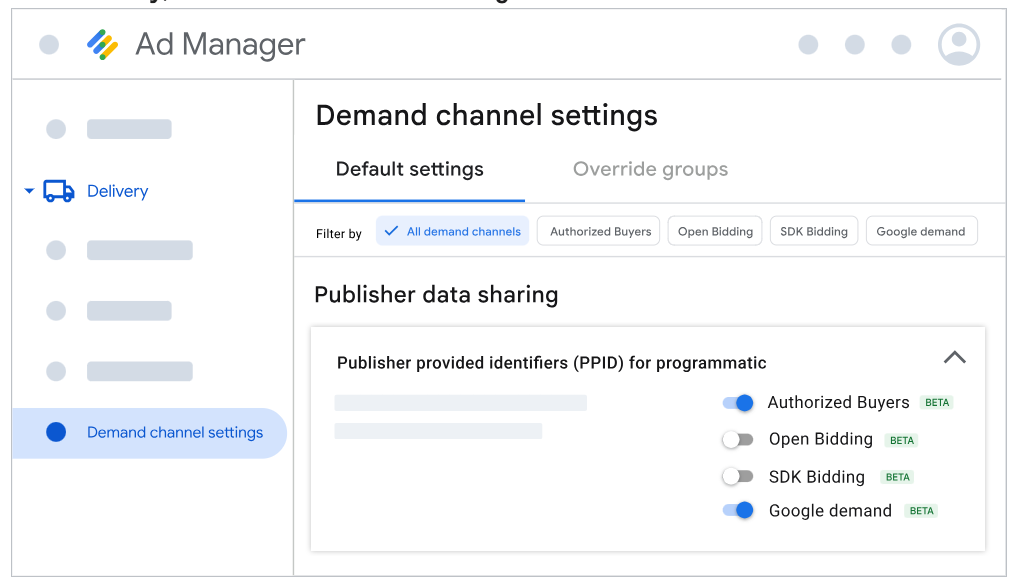
Publisher Provided Identifiers (PPIDs); Publishers can pass anonymized user IDs into GAM, allowing audience-based targeting in programmatic without third-party cookies. Before sharing PPIDs with Google demand, Ad Manager turns them into per-publisher partitioned IDs, so users cannot be identified across other publishers’ sites and making it privacy-safe by design.
Publisher Provided Signals (PPS); Publishers can categorize their first-party data into consistent audience or contextual segments and share these signals with programmatic buyers, including Google Ads and Display & Video 360. This means your audience data goes into the auction and buyers compete harder for it.
The result: higher CPMs, stronger demand, and inventory that earns more per session even as overall traffic declines.
2. Build High-Intent Inventory, Not Just High-Traffic Pages
High-intent audience isn’t just for retail media. Any publisher with topic-specific content has it, they just haven’t labeled or priced it differently.
A reader comparing health insurance plans on a personal finance site is high-intent. Someone reading “best SUV under 500 million rupiah” is high-intent. A user on a local news site searching for “property for sale in Serpong” is high-intent.
GAM’s Audience Solutions lets publishers create segments based on user behavior; for example, creating a “Restaurant Enthusiasts” segment from users who visited the dining section at least twice in three days, then serving relevant ads to those users across the entire site, not just within that section. The advertiser reaches a targeted audience. The publisher earns a premium.
The key is to identify which content naturally attracts decision-ready readers, separate that inventory, and price it differently from general traffic.
3. Diversify Formats Beyond Display
Google officially launched Offerwall on June 26, 2025; a tool that lets publishers offer audiences multiple ways to access content, including watching short ads, completing surveys, making micro-payments, or subscribing to newsletters. This is a direct monetization alternative that doesn’t depend on page view volume at all.
Beyond Offerwall, publishers should be actively building:
- Newsletter and email monetization; owned channel, zero algorithm dependency
- Native and sponsored content; higher CPMs, more resilient to zero-click impact
- App inventory; in-app ad revenue is growing where web revenue is declining
- Direct and private marketplace deals; cutting out the open auction middleman and building direct relationships with advertisers who value your specific audience
4. Optimize Yield, Not Just Traffic
Publishers running well-tuned monetization setups are cushioning the revenue impact of traffic losses in a way that publishers relying on raw volume simply can’t.
Google Ad Manager’s AI-powered yield optimization now analyzes real-time data and user behavior more effectively, with AI-driven price floors that dynamically adjust based on demand and smarter ad placements that ensure better viewability and engagement.
Most publishers are not using these features to their full potential. Dynamic floor pricing, viewability optimization, and demand partner configuration, these are the levers that move revenue per session, independent of total traffic.
What This Means for Publishers in Indonesia
Indonesia’s digital ad market is still growing, projected to reach Rp 73.47 trillion by 2030. But that growth is not flowing equally. It’s concentrating around publishers who can offer advertisers something beyond raw impressions: verified audiences, quality context, and measurable outcomes.
Local publishers have a genuine advantage here. Hyperlocal audiences, readers in specific cities, interest communities, or professional verticals are exactly what advertisers increasingly need but struggle to reach through national platforms.
The question is whether that advantage is being activated through the right infrastructure.
The ProPS Perspective
As a Google Certified Publishing Partner (GCPP), ProPS works with publishers across Indonesia to build exactly this kind of infrastructure, connecting first-party data to GAM, identifying high-intent inventory, configuring yield optimization, and opening direct demand relationships that go beyond the open auction.
The Google Ad Network isn’t broken. But it rewards publishers differently than it used to. The ones who adapt who understand their audience deeply and build monetization around that understanding will continue to generate strong revenue from it. The ones who wait for traffic to come back may be waiting a long time.
FAQ
Q: Does this mean Google Ad Network is no longer worth using for publishers?
Not at all. Google Network remains the most accessible and scalable programmatic monetization infrastructure available to publishers. What’s changing is the playbook for getting the most out of it. Publishers who configure GAM properly, with first-party data, dynamic pricing, and audience segmentation are still generating strong revenue. The ones struggling are those still running default setups built for a higher-traffic world.
Q: Can small publishers with limited traffic still benefit from first-party data strategies?
Yes, and in some ways, smaller niche publishers have an advantage. A small publisher with a loyal, specific audience and properly activated first-party data can command higher CPMs than a large publisher with generic, high-volume traffic. Advertiser demand is increasingly about audience quality, not just reach.
Q: Do I need GAM 360 to activate first-party data, or does the free version work?
The free version of GAM supports basic audience segmentation and some first-party data features. However, GAM 360 unlocks the full Audience Solutions suite, including PPIDs at scale, advanced reporting, and direct integration with DV360 demand. For publishers with significant programmatic revenue, the upgrade to GAM 360 typically pays for itself. A GCPP partner can help assess whether the investment makes sense for your specific setup.
Q: What’s the difference between Publisher Provided Signals (PPS) and PPIDs?
PPIDs are anonymized user identifiers that allow audience-based targeting across sessions, useful for frequency capping and user-level targeting. PPS are contextual and audience signals attached to the bid request, they tell buyers what kind of content and audience they’re reaching without identifying individual users. Both can be used together and are complementary tools in a first-party data strategy.
Q: How quickly can publishers see results from these changes?
Dynamic floor pricing and yield optimization changes can show measurable impact within weeks. Audience segmentation and first-party data activation typically take one to three months to set up properly and see meaningful CPM lift. Direct deal development is a longer play, three to six months, but tends to produce the most stable and highest-value revenue. The key is starting now rather than waiting for traffic to recover on its own.
Sources
- PPC Land — Alphabet Q1 2026 earnings: Google Network revenue falls 4% https://ppc.land/alphabet-q1-2026-google-network-ad-revenue-falls-4-as-ai-reshapes-the-web/
- PPC Land — Google revenue shift reaches 90% as network advertising faces decline https://ppc.land/google-revenue-shift-reaches-90-as-network-advertising-faces-decline/
- Search Engine Journal — What Google & Microsoft earnings say about search https://www.searchenginejournal.com/what-google-microsoft-earnings-say-about-search/573499/
- Playwire — Google AI Overviews are gutting publisher traffic https://www.playwire.com/blog/resources/blog/google-ai-overviews-are-gutting-publisher-traffic
- Adtelligent — First-party data: practical monetization guide for publishers https://adtelligent.com/blog/ad-tech-insights/first-party-data-monetization-practical-guide-for-publishers/
- Google Ad Manager Blog — New ways for publishers to activate first-party data https://blog.google/products/admanager/new-ways-publishers-activate-first-party-data/
- Google Ad Manager Help — First and third-party audience segments https://support.google.com/admanager/answer/2990419
- Google Ad Manager Success Stories — WSJ first-party data boosts advertiser renewal https://admanager.google.com/home/success-stories/wsj-bg-first-party-data-performance/
- PPC Land — Google unveils Offerwall to expand publisher monetization options https://ppc.land/google-unveils-offerwall-to-expand-publisher-monetization-options/
- Monetiscope — Google Ad Manager updates: what publishers need to know in 2025 https://monetiscope.com/google-ad-manager-updates-2025/